
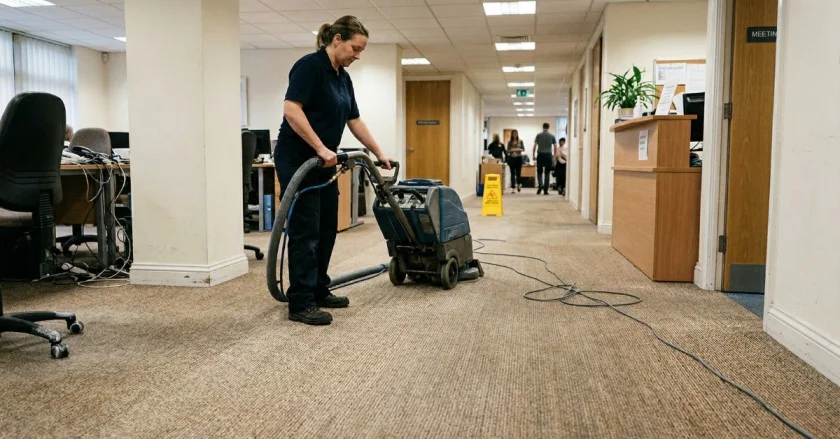
If you are wondering how often to clean office carpet, the best answer is this: most office carpets should be professionally deep cleaned every 6 to 12 months, but high-traffic areas often need attention much sooner. Entrances, hallways, reception zones, and other busy spaces may need interim cleaning monthly or every few months, while daily vacuuming and fast spot treatment should be part of the routine.
That said, there is no one-size-fits-all commercial carpet cleaning schedule. The right frequency depends on foot traffic, the type and color of carpet, local weather, whether people track in dirt from outside, and how well your day-to-day maintenance is handled. Competitor articles consistently agree on one thing: offices with heavier use need a more aggressive plan than low-traffic spaces.
The Short Answer
For most offices, a smart office carpet cleaning frequency looks like this:
- Daily: Vacuum entrance areas, hallways, and other high-traffic zones.
- As needed: Spot clean spills and stains immediately.
- Every 1 to 3 months: Schedule interim cleaning for the dirtiest areas, especially lobbies, corridors, and heavily used pathways. In very busy spaces, some competitors recommend 1 to 2 professional cleanings per month.
- Every 6 to 12 months: Deep clean the full office carpet.
If your office is lightly used, you may be closer to the 12-month mark. If your carpet gets constant traffic, food spills, mud, or seasonal debris, you should clean it more often. The Carpet and Rug Institute also recommends professional deep cleaning for business carpets every 12 to 18 months as a broad maintenance baseline, but many working offices will need service sooner than that due to real-world traffic and soil levels.
Why Office Carpets Get Dirty Faster Than People Think
Office carpet does not have to look terrible to be overdue for cleaning. Dirt, dust, and debris settle into the fibers over time, and regular foot traffic pushes them deeper. According to the Carpet and Rug Institute, regular vacuuming matters because soil can damage carpet fiber and shorten the useful life of the carpet.
In offices, the problem grows faster because carpets deal with:
- Shoes tracking in dust, moisture, and outdoor debris
- Coffee spills, snack crumbs, and breakroom traffic
- Rolling chairs and repeated wear patterns
- Seasonal mess from rain, snow, or mud
- Visitors notice the carpet before they notice anything else
Competitor pages also point out that carpet cleanliness affects first impressions, and that higher-traffic spaces need more frequent professional maintenance to keep carpets presentable and lasting longer.
What Actually Determines Commercial Carpet Cleaning Frequency?
1. Foot Traffic
This is the biggest factor. A quiet private office does not need the same cleaning schedule as a busy front lobby or shared hallway. Multiple competitor sources recommend cleaning high-traffic areas more often than the rest of the building, with entrances and halls often needing the most attention.
2. Type, Color, and Density of Carpet
Light-colored carpets show dirt faster. Dense, high-nap carpet can trap more soil. Several reference pages note that carpet style, pile, density, and color all influence how often you should schedule service.
3. Weather and Season
Rain, dust, snow, and road salt can quickly change your cleaning needs. Competitor guidance notes that climate and seasonal conditions matter because they affect how much debris employees and visitors bring inside.
4. Building Use
An office usually needs less frequent carpet cleaning than a restaurant, school, or medical facility, but that does not mean “once in a while” is enough. Office competitor pages commonly place office carpet deep cleaning around every 6 to 12 months, with busier offices needing more frequent service.
5. Entry Mats and Preventive Maintenance
Using walk-off mats at entrances can reduce how much dirt reaches the carpet. Both industry and competitor sources recommend stopping soil at the door as part of a better carpet maintenance plan.
You also can read: What Does Office Cleaning Include?
A Practical Office Carpet Cleaning Schedule
Here is a beginner-friendly commercial carpet cleaning schedule you can actually follow:
Daily Tasks
- Vacuum reception areas, entrances, hallways, and common walkways
- Check for visible spots and spills
- Clean stains as soon as possible before they set
This approach matches both CRI guidance on vacuum frequency by traffic level and competitor advice for routine office upkeep.
Weekly Tasks
- Vacuum low-traffic spaces such as conference rooms or executive offices at least once a week
- Inspect corners, edges, and under desks.
- Check mats at doors and replace or clean them if they are overloaded with dirt.t
Competitor guidance specifically notes that lower-traffic rooms can usually be cleaned less often than corridors and general office areas.
Monthly or Quarterly Tasks
- Schedule interim cleaning for busy traffic lanes
- Focus on entrances, lobbies, shared corridors, and breakroom-adjacent carpet.
- Add extra cleanings during rainy or winter seasons
For heavy-traffic areas, competitors recommend professional preventative cleaning as often as 1 to 2 times per month; medium-traffic office areas may do well with service every 2 to 3 months.
Semi-Annual or Annual Tasks
- Deep clean the full office carpet every 6 to 12 months
- Review whether the current schedule is working based on appearance, odor, stains, and wear patterns
- Document problem areas so they can be handled more often next cycle
This is the most realistic answer for businesses asking about office carpet cleaning frequency: build around 6 to 12 months for whole-office deep cleaning, then layer in more frequent care where traffic is highest.
Signs Your Office Carpet Needs Cleaning Sooner
Do not wait only for a calendar reminder. Your carpet probably needs earlier service if you notice:
- Dark traffic lanes near entrances
- Lingering odors
- Stains that keep returning
- A dull or matted appearance
- More dust around the office
- Complaints about the space looking tired or unprofessional
Even well-run office buildings can have indoor air quality and comfort issues when maintenance slips, and EPA guidance emphasizes that housekeeping and maintenance are part of maintaining a good indoor environment.
How to Make Your Office Carpet Last Longer
A better cleaning schedule is not just about appearance. It is also about protecting the carpet investment.
Use these professional cleaning tips:
- Vacuum on a schedule, not randomly
- Treat spills immediately
- Use entry mats inside and outside doors
- Increase cleaning frequency during messy seasons
- Separate high-, medium-, and low-traffic zones
- Bring in professionals before the carpet looks beyond help
That last point matters. Regular maintenance is much cheaper than early carpet replacement, and industry guidance stresses that vacuuming plus periodic professional deep cleaning helps extend carpet life.
Final Answer
So, how often should an office carpet be cleaned?
For most businesses, the best office carpet cleaning frequency is:
- Vacuum high-traffic areas daily
- Spot clean immediately
- Professionally clean busy zones monthly or every few months
- Deep clean the full office carpet every 6 to 12 months
That schedule keeps the carpet looking better, helps reduce wear, and supports a cleaner, more professional workplace. If your office has heavy foot traffic, frequent visitors, or messy weather conditions, move to a more frequent commercial carpet cleaning schedule instead of waiting until the carpet looks obviously dirty.
When it is time to refresh your workspace, consider hiring Grand Slam Janitorial for professional office carpet cleaning services that help keep your business clean, presentable, and ready for employees and visitors.
