
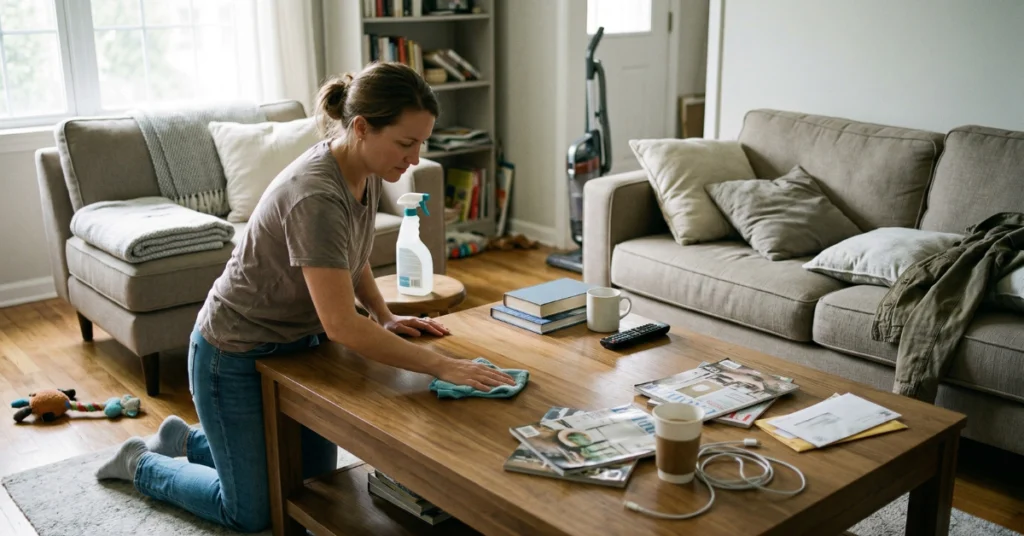
If cleaning your home always feels never-ending, the 80/20 rule can make it a lot easier.
In house cleaning, the 80/20 rule means that roughly 80% of the visible results come from 20% of your cleaning efforts. It comes from the Pareto Principle, a concept tied to Vilfredo Pareto’s observation that many outcomes are driven by a smaller set of causes. In practical terms, it means you do not need to clean everything at once to make your home look and feel much better.
A lot of articles talk about the 80/20 rule in two different ways. Some use it as a cleaning method, where you focus on the few tasks that create the biggest visual impact. Others use it as an organizing or decluttering method, where you keep spaces about 80% full and leave 20% open so your home feels calmer and is easier to maintain. Both ideas are useful, and together they explain why this rule works so well for busy households.
What Does the 80/20 Rule Mean for Cleaning?
The simplest definition is this:
- Focus on the tasks people notice first
- Prioritize the rooms used most often
- Clean for impact before perfection
- Save detailed scrubbing for another day
That is why Pareto principle cleaning is so popular. Instead of spending an hour cleaning tiny corners while your counters, floors, and bathroom sink still look messy, you start with the chores that change the whole feel of the room right away. Apartment Therapy highlights exactly this kind of approach by focusing on quick wins like clearing floors, clearing surfaces, making the bed, vacuuming, and cleaning mirrors or glass.
Why the 80/20 Rule Works So Well
Most homes have a few “high-impact” zones that affect how clean everything feels. Kitchens, bathrooms, living rooms, entryways, and visible floors usually create the strongest first impression. That is why cleaning companies and organizing writers keep coming back to the same advice: start with the areas that people use and see the most.
The rule also works because it reduces overwhelm.
When people try to clean everything in one session, they often get stuck, distracted, or frustrated. But when you focus on a short list of high-return tasks, cleaning feels doable. That makes it easier to stay consistent, and consistency usually matters more than occasional marathon cleaning days.
The 20% of Cleaning Tasks That Usually Matter Most
Not every task gives the same payoff. These are the chores that often create the biggest visual difference in the shortest time:
1. Clear clutter off floors and visible surfaces
A room looks messy fast when floors are covered with shoes, laundry, bags, toys, or random items. The same goes for kitchen counters, coffee tables, and bathroom counters. Even before deep cleaning starts, picking up clutter instantly makes a space look more organized.
2. Wipe kitchen counters and clean the sink
The kitchen is one of the most used spaces in any home. Crumbs, spills, dishes, and water spots make it feel dirty quickly. A quick counter wipe and sink reset can make the whole kitchen feel fresher in minutes.
3. Refresh the bathroom basics
You do not always need a full bathroom deep clean. Wiping the sink, mirror, faucet, and toilet exterior often creates a big improvement fast. These are small jobs, but they make the bathroom feel cleaner right away.
4. Vacuum or sweep the main traffic areas
Floors collect dust, crumbs, hair, and dirt fast. Vacuuming rugs or sweeping the main walkways has a strong visual effect, especially in living rooms, hallways, and bedrooms.
5. Make the bed
This one sounds simple, but it works. A made bed changes the entire look of a bedroom in a minute or two and makes the room feel intentionally kept.
6. Take out trash and reset the entryway
Overflowing trash and clutter at the door make a home feel chaotic. These are easy wins and part of the best efficient cleaning methods because they reduce visual mess immediately.
You can also read: What’s the Difference Between Cleaning and Janitorial Services?
A Simple 80/20 Cleaning Routine for Beginners
If you are new to this idea, start with a 20-minute routine.
First 5 minutes: Declutter
Go room by room and remove obvious clutter:
- Pick up clothes
- Throw away trash
- Put dishes in the sink
- Move stray items back where they belong
Next 10 minutes: Clean the high-impact zones
Pick just the most visible tasks:
- Wipe kitchen counters
- Clean the sink
- Wipe bathroom surfaces
- Vacuum or sweep the main floor areas
Last 5 minutes: Reset
Finish with the fast details that make the space feel done:
- Make the bed
- Straighten pillows
- Empty small trash bins
- Wipe mirrors if needed
This kind of plan works because it follows the heart of 80/20 rule cleaning: do the few things that make the biggest difference first.
How Decluttering Fits Into the 80/20 Rule
A smart blog on this topic should not stop at cleaning, because clutter is often what makes a home look dirty even when it is technically clean.
Several organizing articles connect the 80/20 rule to the idea that we use a small percentage of our belongings most of the time. They also recommend keeping shelves, closets, cabinets, and other storage areas from being packed completely full. Leaving some open space makes it easier to find what you need, easier to put things away, and easier to clean around them.
That means the rule can help in two ways:
- Cleaning: Focus on the few chores with the biggest visible payoff
- Decluttering: Reduce the extra stuff that keeps making your home look messy
When you combine both, housekeeping gets much easier.
Common Mistakes People Make With the 80/20 Rule
The rule is helpful, but people sometimes use it the wrong way.
Mistake 1: Thinking it means “clean less forever”
The 80/20 rule is great for maintenance, but it does not replace occasional deep cleaning. Baseboards, vents, under furniture, grout, and inside appliances still need attention sometimes.
Mistake 2: Ignoring hygiene for appearance
Some tasks may not be obvious visually but still matter, like sanitizing food-prep areas or cleaning high-touch surfaces during busy weeks. Use the rule to prioritize, not to neglect important cleaning.
Mistake 3: Trying to apply the ratio too literally
The 80/20 split is a guideline, not exact math. The point is to identify the “vital few” tasks that move the needle the most.
When the 80/20 Rule Is Enough and When You Need More
Use the 80/20 rule when:
- You are short on time
- Guests are coming soon
- You need a quick reset
- You want a manageable daily or weekly routine
Go beyond 80/20 cleaning when:
- You are doing seasonal deep cleaning
- You are moving in or out
- Allergies, odors, or buildup are getting worse
- The home has fallen behind and needs a full reset
Final Thoughts
So, what is the 80/20 rule in house cleaning? It is a smart way to clean by focusing on the small number of chores that create the biggest visible result. Instead of chasing perfection, you prioritize impact.
That is what makes the 80/20 rule so useful for real life. It is practical, beginner-friendly, and one of the best house cleaning tips for people who want a cleaner home without spending all day scrubbing.
And when you want that same efficient, high-quality result without handling it yourself, Grand Slam Janitorial can help with professional cleaning services that save time and keep your space looking its best.
