
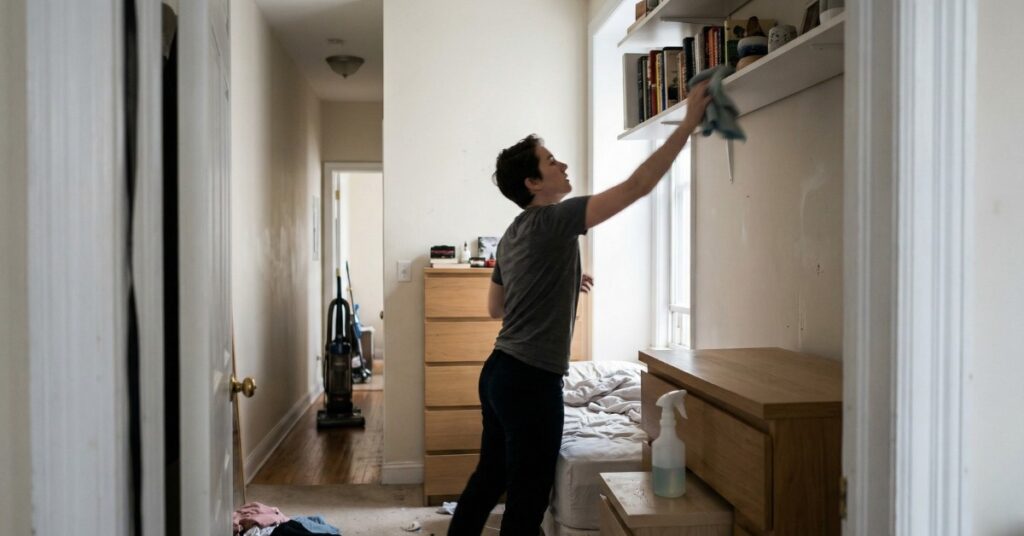
If you have ever cleaned your kitchen, then noticed dust on the floor, then wiped the floor only to track crumbs back in five minutes later, you already know why cleaning order matters.
The best way to clean a house is not just about working hard. It is about working in the right sequence. A smart cleaning order helps you avoid redoing tasks, saves time, and makes your whole routine feel less overwhelming. Across major cleaning guides, the most consistent advice is to declutter first, clean from top to bottom, move from dry tasks to wet tasks, and finish with floors last. Some sources also recommend tackling bathrooms early, while others suggest starting with the most-used rooms first.
Why the Order of Cleaning Matters
A good cleaning order house routine helps you:
- Avoid spreading dust onto freshly cleaned areas
- Reduce backtracking from room to room
- Clean faster with less effort
- Stay focused instead of feeling scattered
- Get better results with the same amount of time
That is why so many professional cleaning guides emphasize following a system instead of randomly jumping between tasks.
The Correct Order to Clean a House at a Glance
Here is the house cleaning checklist order that works best for most homes:
- Gather supplies
- Declutter each room
- Start high and dust top to bottom
- Clean glass, mirrors, and surfaces
- Disinfect high-touch spots
- Clean bathrooms
- Clean the kitchen
- Finish bedrooms and living areas
- Vacuum, sweep, and mop floors last
This order blends the most practical advice from the competitor articles into one efficient cleaning routine that beginners can actually follow.
Step 1: Gather Your Cleaning Supplies First
Before you begin, get everything in one place. Several guides stress preparation because stopping halfway through to hunt for cleaner or microfiber cloths wastes time and breaks your momentum. Common supplies include an all-purpose cleaner, disinfectant, glass cleaner, bathroom cleaner, microfiber cloths, sponges, a vacuum, broom, mop, and gloves.
A basic cleaning caddy should include:
- Microfiber cloths
- All-purpose cleaner
- Disinfectant
- Glass cleaner
- Bathroom cleaner
- Scrub brush or sponge
- Vacuum or broom
- Mop and bucket
Step 2: Declutter Before You Actually Clean
This is the first real step in the best way to clean a house.
Pick up clothes, shoes, toys, mail, dishes, and anything else that is out of place. Put items back where they belong or place them in a basket to sort later. Cleaning around clutter slows you down and makes every other step harder. The American Cleaning Institute says to start by picking up, and multiple competitor articles also put decluttering first.
Quick decluttering tip
Do one fast sweep through the whole home before deep cleaning any room. That gives you clear surfaces and open floors to work with.
Step 3: Dust From Top to Bottom
This is one of the biggest rules in any efficient cleaning routine.
Always clean high surfaces before low ones. Dust ceiling fans, light fixtures, shelves, blinds, and furniture tops first. Then move down to tables, counters, and baseboards. This matters because dust falls. If you vacuum first and dust later, you will create extra work for yourself. That top-down approach appears again and again in the sources.
What to dust first
- Ceiling fans
- Air vents
- Light fixtures
- Shelves
- Window sills
- Furniture tops
- Baseboards
Use a microfiber cloth or duster that traps dust instead of pushing it around.
You also can read: What Is the 80/20 Rule in House Cleaning?
Step 4: Clean Mirrors, Glass, and Flat Surfaces
Once dust is under control, wipe mirrors, windows, tables, counters, and other visible surfaces. Doing this after dusting makes sense because you are removing the leftover particles and smudges in one pass. Competitor pages often place dusting and surface wiping together for that reason.
This is also a good time to wipe:
- Coffee tables
- Side tables
- TV stands
- Desks
- Cabinet fronts
- Door frames
Step 5: Disinfect High-Touch Areas
If you want a more hygienic home, do not skip this step. eMaids specifically calls out doorknobs, light switches, and handles as important high-touch surfaces that should be cleaned regularly. The American Cleaning Institute also recommends cleaning frequently touched surfaces often and considering disinfection.
Focus on:
- Doorknobs
- Light switches
- Remote controls
- Faucet handles
- Appliance handles
- Stair railings
This step is especially important during cold and flu season or in busy households.
Step 6: Clean Bathrooms Next
Bathrooms are one of the hardest rooms to clean, which is why many cleaning guides suggest handling them early. Merry Maids highlights starting with the bathroom first, while other sources recommend prioritizing wet or high-bacteria areas like bathrooms and kitchens.
Best bathroom cleaning order
- Spray the shower, tub, sink, and toilet first
- Let products sit for a few minutes
- Clean mirrors and counters
- Scrub the tub or shower
- Clean the sink
- Clean the toilet last
- Wipe fixtures
- Mop the floor at the very end of the whole-house routine if possible
Starting with areas that need soaking makes bathroom cleaning more efficient.
Step 7: Move to the Kitchen
The kitchen is another high-effort zone, and several competitor articles treat it as one of the toughest rooms. It collects grease, crumbs, fingerprints, spills, and bacteria fast, so it deserves focused attention.
Kitchen cleaning order
- Put away food and wash dishes
- Clear countertops
- Wipe small appliances
- Clean the microwave and stovetop
- Disinfect counters and sink
- Wipe cabinet fronts and handles
- Take out trash
- Leave the floor for later
The kitchen should usually come after bathrooms because both are heavy-duty areas, but by this point you will already have finished most of the dry dusting work in the home.
Step 8: Finish Bedrooms and Living Areas
Once the hardest zones are done, the rest of the home feels much easier. Competitor guides commonly move into bedrooms and lower-mess spaces after kitchens and bathrooms.
In bedrooms:
- Make the bed
- Change sheets if needed
- Dust furniture
- Wipe nightstands and dressers
- Put away clothes
- Spot clean mirrors
In living rooms:
- Straighten pillows and blankets
- Dust electronics carefully
- Wipe tables
- Clean visible smudges
- Tidy shelves and décor
Step 9: Vacuum, Sweep, and Mop Floors Last
This is the final step in the correct house cleaning order. Nearly every source agrees on this. Dust, crumbs, and debris fall throughout the cleaning process, so floors should always be last.
Floor-cleaning sequence
- Vacuum carpets and rugs
- Sweep hard floors
- Mop tile, vinyl, or wood-safe surfaces
- Let floors dry fully before walking on them
If you mop too early, you will just have to clean the same area again.
Common Mistakes That Make Cleaning Take Longer
Even with a solid house cleaning checklist, a few habits can slow you down:
- Cleaning before decluttering
- Starting with floors instead of surfaces
- Using too many products at once
- Jumping between rooms randomly
- Forgetting high-touch areas
- Not letting bathroom products sit before scrubbing
The most efficient cleaning methods are usually the simplest: stay consistent, move in order, and do not overcomplicate the process.
Final Thoughts
So, what is the correct order to clean a house?
For most homes, the smartest answer is: declutter first, dust from top to bottom, wipe and disinfect surfaces, clean bathrooms and kitchens, tidy bedrooms and living spaces, and save all floor cleaning for last. That sequence gives you a cleaner home with less wasted effort and a much more manageable routine. It is the cleaning order house strategy that helps beginners clean with confidence instead of frustration.
If you would rather skip the hassle and get the job done right the first time, Grand Slam Janitorial can help with efficient, professional, and high-quality cleaning services tailored to your home.
