
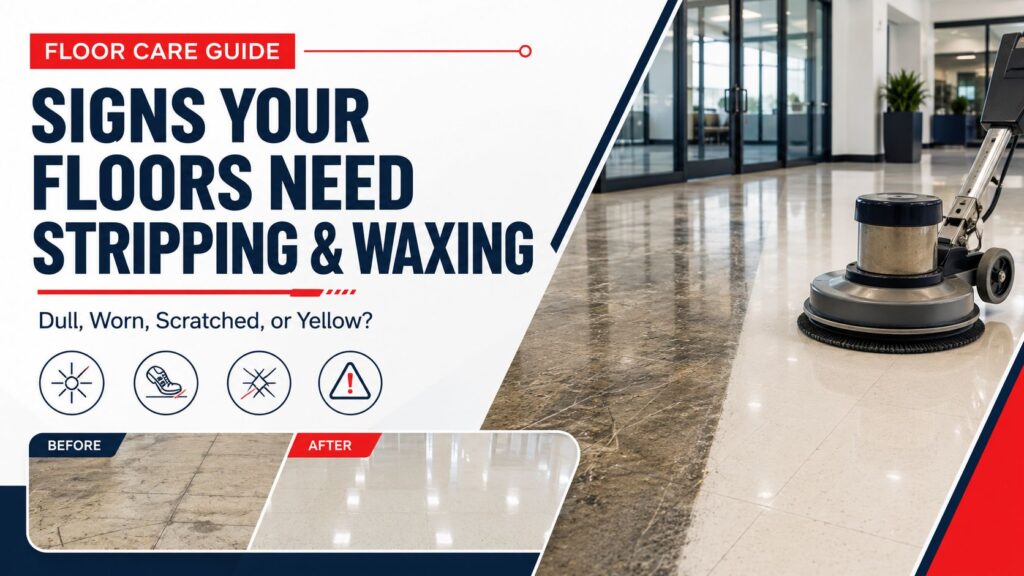
Your commercial floors need stripping and waxing when they still look dull, dirty, yellow, scratched, patchy, or worn after regular cleaning. In most cases, that means the protective floor finish has broken down, and mopping or buffing alone will not bring the floor back.
For offices, retail spaces, medical offices, warehouses, and multi-tenant buildings, worn floors can make the whole facility feel neglected. It is not always about shine, either. Old wax can trap dirt, create uneven traction, and leave the actual flooring more exposed to wear.
Grand Slam Janitorial provides commercial cleaning and floor strip and wax services for businesses in Las Vegas, Nevada, and Flagstaff, Arizona. If your floors are starting to look tired, the signs below will help you decide what kind of service you may need.
What Does Floor Stripping and Waxing Mean?
Floor stripping and waxing is a restorative floor care process. The old wax or finish is removed from the floor, the surface is cleaned and neutralized, and new coats of protective finish are applied.
Think of it like resetting the floor surface.
Regular mopping removes daily soil. Floor buffing services polish the finish that is already there. A full strip and wax removes damaged buildup and gives the floor a fresh protective layer.
In short: stripping removes the old finish, and waxing replaces it with a cleaner, smoother, more protective surface.
Common Signs Your Commercial Floors Need Stripping and Waxing
The easiest sign is this: the floor looks bad even after it has been cleaned.
That usually means the issue is not sitting on top of the floor anymore. It is built into the old finish.
1. The Floor Looks Dull Right After Mopping
If the floor dries and still looks flat, gray, or tired, the protective wax may be worn thin. A healthy finish reflects light. A worn finish absorbs it.
This is common in lobbies, hallways, reception areas, breakrooms, and other high-use spaces.
A quick mop may make the floor smell clean, but it will not restore a worn-out finish.
In short: if your dull commercial floors do not improve after routine cleaning, it may be time for commercial floor waxing.
2. Yellowing or Cloudy Buildup Is Showing
Old floor finish can turn yellow, amber, cloudy, or uneven over time. This often happens when dirt, cleaning residue, and old wax layers build up.
The tricky part is that the floor may technically be clean, but still look dirty.
If the discoloration is trapped inside the wax, more mopping will not remove it. Adding more wax over yellowed layers can make the floor look worse because it seals the discoloration underneath.
In short: yellowing is one of the clearest signs of floor finish buildup.
3. High-Traffic Areas Look Darker Than the Rest
Walk to the end of the hallway and look across the floor. If the middle walking path looks darker than the edges, the finish is wearing unevenly.
This happens where people walk, carts roll, chairs move, or equipment gets pushed through the same route every day.
In Las Vegas, dust and fine grit can get tracked into buildings and grind into the worn finish. In Flagstaff, winter moisture and tracked-in debris can be especially rough on entryways and corridors.
In short: visible traffic lanes usually mean your high-traffic floor maintenance plan needs more than basic mopping.
4. Scuffs and Scratches No Longer Buff Out
Light scuffs can often be improved with floor buffing services. Deeper scratches are different.
If scratches cut through the finish or expose the tile underneath, buffing cannot rebuild the missing protective layer. The floor needs a fresh finish to help protect the surface again.
Look closely near:
- Entrances
- Hallways
- Rolling chair areas
- Breakrooms
- Retail checkout lanes
- Medical office corridors
- Warehouse office transitions
In short: if scuffs remain after buffing, your facility may need strip and wax services instead of another quick polish.
5. The Floor Feels Sticky, Slick, or Uneven
A commercial floor should not feel gummy, tacky, slippery, or patchy under normal conditions.
Sticky areas can come from old finish, cleaner residue, or wax applied over a surface that was not fully prepared. Slick spots can happen when the finish wears unevenly or when the wrong product is used for the floor type.
This matters because commercial floors are not just part of your building’s appearance. They are walking surfaces used by employees, visitors, patients, tenants, and customers every day.
In short: uneven texture is a warning sign. Ask for an on-site floor assessment before applying more product.
6. Peeling, Flaking, or Powdering Finish
If the finish is peeling or flaking, the floor is past the touch-up stage.
New wax needs a clean, stable surface to bond correctly. If the old layer is already lifting, adding more finish on top will not solve the problem. It can create more buildup and a rougher appearance.
A white powdery residue in worn areas can also point to finish breakdown.
In short: peeling finish usually means full floor stripping and waxing is the right call.
Strip and Wax vs Buffing vs Scrub and Recoat
Not every worn floor needs a full strip and wax. A good floor care provider should tell you when a lighter service makes more sense.
Here is the simple difference.
Floor Condition | Better Service Option | Why It Makes Sense |
Light scuffs, mild dullness, finish still intact | Floor buffing services | Buffing polishes the existing finish |
The top layer is worn, but no heavy yellowing or peeling | Scrub and recoat | Removes surface soil and adds a fresh finish without full stripping |
Yellowing, dark traffic lanes, peeling, deep scratches, and old buildup | Floor strip and wax | Removes failed finish and rebuilds protection |
Bare tile, damaged flooring, loose tiles | Floor repair may be needed first | Wax cannot fix structural floor damage |
A scrub and recoat can be a smart middle option when the finish is tired but not failing. It costs less time than a full strip and can help extend the life of the floor care cycle.
A full strip and wax is better when the finish is too far gone.
In short: do not pay for a full strip if buffing or recoating will solve the issue, but do not keep buffing a floor that has already failed.
A Quick Floor Check Facility Managers Can Do
You do not need to diagnose the floor perfectly before calling a cleaning company. Still, a quick visual check can help you explain the problem.
Walk the facility during normal lighting and check:
- Does the floor look dull after cleaning?
- Are traffic lanes darker than the edges?
- Is the finish yellow, cloudy, or patchy?
- Do scratches remain after buffing?
- Are there sticky, slick, or peeling areas?
- Do entrances look worse than interior areas?
- Do tenants, staff, or customers notice the floor condition?
If you answer yes to several of these, the floor may need commercial hard floor cleaning with stripping and waxing.
Expert tip: Take a few photos from different angles before requesting a quote. Good lighting helps show dullness, traffic lanes, and discoloration clearly.
In short: the more signs you see at once, the more likely your commercial floors need stripping and waxing.
How Often Should Commercial Floors Be Stripped and Waxed?
The right schedule depends on foot traffic, floor type, weather exposure, cleaning frequency, and the appearance standard you want to maintain.
For many commercial spaces, a full strip and wax may be needed once or twice a year. High-traffic facilities may need more frequent floor care. Lower-traffic offices may need less.
A better question is not just “how often?” It is “What condition is the finish in right now?”
Facilities that often need closer monitoring include:
- Medical offices
- Retail stores
- Corporate offices
- Multi-tenant commercial buildings
- Industrial offices
- Busy lobbies
- Breakrooms
- Restroom corridors
- Entryways
In Las Vegas, fine dust and constant foot traffic can make floors look worn faster. In Flagstaff, seasonal moisture and tracked-in debris can affect entrances and hallways.
In short: your schedule should be based on traffic and floor condition, not a one-size-fits-all calendar.
What Happens If You Wait Too Long?
Waiting too long can turn a floor care issue into a bigger maintenance problem.
Once the protective finish wears away, the actual flooring is more exposed to soil, moisture, scuffs, and staining. At that point, cleaning becomes harder, and the floor may not respond well to simple maintenance.
You may also spend more on repeated mopping, spot cleaning, or buffing without getting the result you want.
A neglected floor can also affect how people judge the rest of your facility. If the entrance floor looks grimy, visitors may assume the rest of the building is not being maintained well.
In short: routine commercial floor waxing can help protect the floor and reduce the need for heavier restoration later.
What to Ask Before Scheduling Strip and Wax Services
Before hiring a company, ask a few practical questions. The answers will tell you a lot about how the job will be handled.
Ask:
- What type of flooring do we have?
- Does the floor need buffing, scrubbing, and recoating, or full stripping?
- How many coats of finish are included?
- Will the work be done after-hours or in phases?
- How long before employees can walk on the floor?
- Do we need to move furniture or equipment?
- Are you licensed and insured?
- Will we receive a clear written proposal?
- Can this be added to a recurring cleaning plan?
Grand Slam Janitorial starts with a free on-site walkthrough, then provides a detailed cleaning proposal within 24 to 48 business hours. That helps businesses understand the scope, schedule, and pricing before work begins.
In short: a good floor waxing service should inspect first, explain the options, and avoid quoting blindly.
How Recurring Cleaning Helps Floors Last Longer
A strip and wax service can reset the floor, but daily and weekly maintenance keep it looking better.
Recurring janitorial services and commercial cleaning services help reduce the dirt and grit that wear down floor finish. Floor sweeping, mopping, restroom cleaning, breakroom cleaning, trash removal, and high-touch cleaning all support the overall condition of the facility.
After a fresh wax, your cleaning plan should include:
- Regular sweeping or dust mopping
- Proper wet mopping
- Neutral floor cleaner when appropriate
- Entry mat maintenance
- Fast cleanup of spills
- Periodic buffing
- Scheduled floor inspections
This is where a customized plan helps. A small office, retail shop, medical office, and warehouse do not need the same cleaning frequency.
In short: VCT floor care and hard floor maintenance work best when they are part of a routine cleaning program, not a once-a-year emergency.
FAQs
Your floor may need floor stripping and waxing if it looks dull after cleaning, has yellow buildup, shows dark traffic lanes, has scratches that do not buff out, or has a peeling finish. If the floor still looks dirty after proper cleaning, the issue is likely inside the old finish.
You can apply finish over an existing surface only when the old finish is clean, stable, and properly prepared. You should not wax over yellowed, peeling, sticky, or dirty buildup. That can trap the problem under new layers.
Strip and wax vs buffing comes down to the condition of the finish. Buffing polishes the existing finish. Stripping and waxing removes failed finish and applies new protective coats.
There is no single answer for every facility. High-traffic buildings may need floor strip and wax service more often, while lower-traffic offices may go longer between services. A walkthrough is the best way to set the right schedule.
Timing depends on square footage, floor condition, furniture, drying time, and whether the work is done in phases. Many businesses schedule strip and wax services after hours or over weekends to reduce disruption.
No, but VCT floor care is one of the most common uses. Other commercial hard floors may need different products or methods. The floor type should always be checked before service begins.
Yes. A fresh finish still needs proper maintenance. Regular sweeping, mopping, spot cleaning, and periodic buffing help protect the finish and keep the floor looking cleaner between services.
Know the Signs Before the Floor Gets Worse
If your commercial floors need stripping and waxing, they will usually tell you through dullness, yellowing, traffic lanes, scratches, peeling, or a dirty look that keeps coming back after cleaning.
The right next step is not guessing. It is having the floor checked by a commercial cleaning team that can explain whether you need buffing, scrubbing, and recoating, or a full strip and wax.
Grand Slam Janitorial serves businesses in Las Vegas, Nevada, and Flagstaff, Arizona, with commercial cleaning, recurring janitorial services, deep cleaning, floor buffing, and floor strip and wax services.
