
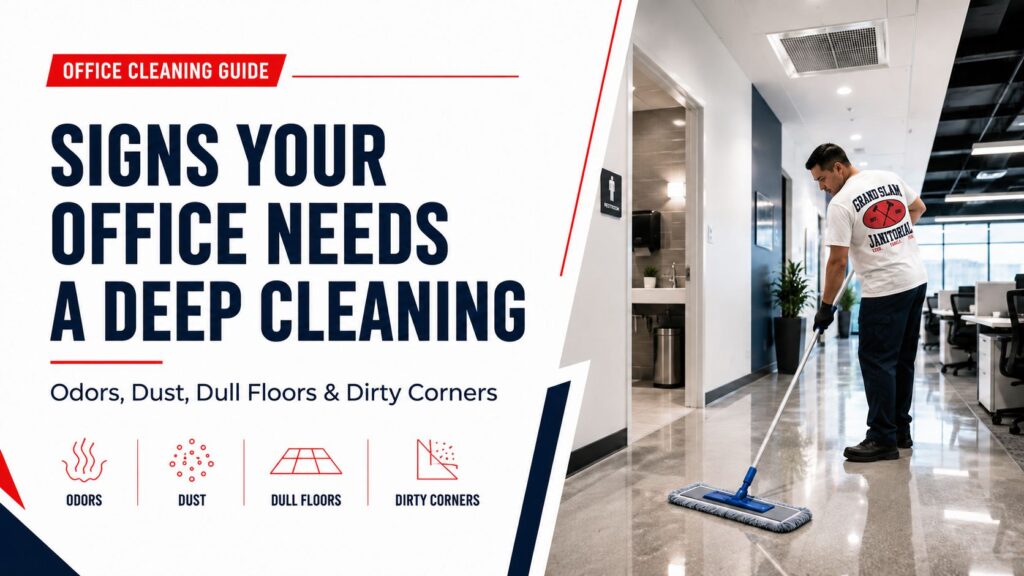
The clearest signs your office needs a commercial deep cleaning are lingering odors, dull floors, dusty vents, dirty corners, restroom buildup, breakroom smells, stained carpets, and employee complaints about cleanliness. If your office still looks or smells “off” after routine cleaning, the issue is usually deeper buildup, not just a missed trash can or dusty desk.
For business owners, property managers, and facility managers, the goal is simple: know when your normal cleaning schedule is no longer keeping up. A timely commercial deep cleaning can reset the space before small issues become obvious to clients, staff, or tenants.
What commercial deep cleaning means for an office
Commercial deep cleaning is a detailed cleaning service that targets buildup in areas that routine cleaning may not fully reach. Standard cleaning usually handles trash, visible dust, light surface wiping, vacuuming, and basic restroom care.
A deep clean goes further. It focuses on edges, corners, vents, baseboards, restrooms, breakrooms, high-touch surfaces, carpets, floors, glass, and other areas that slowly collect dirt.
Think of routine cleaning as maintenance. Think of office deep cleaning as a reset.
Cleaning type | Best for | Common tasks | When it makes sense |
Routine janitorial services | Daily or weekly upkeep | Trash removal, vacuuming, mopping, surface wiping, and restroom touch-ups | Your office is mostly clean, but needs regular care |
Commercial deep cleaning | Built-up dirt and neglected areas | Baseboards, vents, corners, restrooms, breakrooms, carpet care, and detailed disinfection | Your office still looks or smells dirty after routine cleaning |
Recurring cleaning programs | Long-term consistency | Customized daily, weekly, or scheduled cleaning | You want fewer surprise issues and a steady cleaning standard |
In short: regular cleaning keeps the office usable; deep cleaning services bring neglected areas back under control.
Signs Your Office Needs a Commercial Deep Cleaning before it gets worse
Some cleaning problems are easy to ignore because they build slowly. A floor loses its shine over months. A breakroom odor becomes “normal.” Dust collects on vents until someone finally notices it during a meeting.
Here are the office signs worth taking seriously.
1. The office has a smell that will not go away
A clean office should not need air fresheners to feel acceptable. If odors return after trash removal, mopping, or surface cleaning, the source may be deeper.
Common odor sources include:
- Old spills in carpets
- Food residue in breakroom appliances
- Trash bin buildup
- Restroom grout or drain odors
- Moisture trapped in corners or under mats
- Dusty vents are moving stale air through the space
This does not always mean the building is unsafe. It does mean surface cleaning is not solving the source.
In short: if your office smells clean only for a few hours after cleaning, schedule a deeper inspection of carpets, restrooms, breakrooms, and vents.
2. Floors look dull even after mopping
Floors are one of the first things visitors notice. In high-traffic offices, dirt gets pushed into corners, grout lines, carpet fibers, and floor finish.
Hard floors may start to look flat, cloudy, or scratched. Carpets may look dark near entrances, hallways, and shared work areas. If your team is cleaning regularly but the floors still look tired, deeper floor care may be needed.
Depending on the floor type, this may include carpet shampooing, machine scrubbing, buffing, or floor strip and wax services.
Expert tip: entryways usually tell the truth first. If the entrance looks worn, the rest of the office may be carrying the same buildup in less visible areas.
3. Restrooms never feel fully clean
Restrooms can look acceptable at a glance while still having buildup around fixtures, partitions, grout, baseboards, floor edges, and exhaust vents.
Watch for:
- Lingering odor
- Stained grout
- Water spots around sinks
- Dust on vents or partitions
- Sticky floors
- Overflowing supplies or poorly maintained dispensers
- Complaints from staff or visitors
This is where restroom cleaning and sanitization matter. Restrooms affect how people judge the whole business, even if the reception area looks clean.
In short: if restrooms feel unpleasant after normal cleaning, it is time for deeper restroom detailing, not just another quick wipe-down.
4. Dust keeps coming back too quickly
Some dust is normal. But if surfaces look dusty again shortly after cleaning, hidden buildup may be feeding the problem.
Check these areas:
- Air vents and return grilles
- Ceiling fans
- Light fixtures
- High shelves
- Window blinds
- Tops of cabinets
- Baseboards
- Behind desks and filing cabinets
When vents and high surfaces are ignored for too long, dust keeps moving through the office. This can make the whole space feel stale even when desks are wiped.
For offices in Las Vegas, dust from parking lots, dry conditions, and frequent foot traffic can make entryways and vents look dirty faster. In Flagstaff, snow, mud, cinders, and seasonal debris can create heavier floor and carpet buildup.
5. Breakroom surfaces feel sticky or smell stale
The breakroom gets used hard. People heat food, spill coffee, forget leftovers, and touch the same appliance handles all day.
A normal wipe-down may not be enough when there is buildup in:
- Microwave interiors
- Refrigerator handles and shelves
- Coffee stations
- Sink areas
- Counter seams
- Trash areas
- Cabinet pulls
- Floors under tables and appliances
Good breakroom cleaning should address both appearance and odor sources. If the breakroom is the place employees complain about most, that is a strong sign the office needs a deeper reset.
In short: breakroom odors usually have a source. Find it, clean it, and adjust the routine so it does not keep coming back.
6. High-touch areas look grimy
High-touch surfaces collect fingerprints, oils, and residue throughout the workday. These areas can look dull before the rest of the office does.
Common high-touch areas include:
- Door handles
- Light switches
- Elevator buttons
- Reception counters
- Shared desks
- Conference room tables
- Handrails
- Appliance handles
- Copy machines
- Keyboards and phones
This is where high-touch surface sanitization and office disinfection services can support a cleaner workplace. The goal is not to make fear-based claims. The goal is to clean shared surfaces with the right process and frequency.
Expert tip: If high-touch surfaces look dirty, your cleaning plan may need both a deep clean and a better recurring schedule.
7. Corners, edges, and baseboards are visibly dirty
Corners are easy to miss during daily cleaning. So are floor edges, door frames, baseboards, wall corners, and tight spaces behind furniture.
These areas may seem small, but they change how clean the whole office feels. A visitor may not notice one dusty baseboard, but they will notice a general feeling that the space is not well-maintained.
A good commercial deep cleaning should include edge work and detail cleaning, not just open-floor mopping.
8. Employees or tenants are mentioning cleanliness
When employees, tenants, or customers mention odors, dust, restrooms, or dirty common areas, take the feedback seriously. Most people do not complain after the first small issue. They usually speak up after noticing the same problem more than once.
This does not always mean your current cleaner is doing a poor job. It may mean the current scope is too light for the building’s traffic, layout, or use.
In short: complaints are useful data. They show you where the cleaning plan does not match the building’s real needs.
9. It has been several months since the last detailed cleaning
Even a well-run office can need periodic deep cleaning. Routine service is not designed to handle every vent, baseboard, carpet fiber, grout line, and hidden corner on every visit.
Busy offices, medical offices, retail spaces, and multi-tenant buildings may need deeper cleaning more often than a small, low-traffic office. The right schedule depends on foot traffic, floor type, restroom use, industry, and how often clients or visitors enter the space.
If you cannot remember the last time your office had a detailed deep clean, that is a sign by itself.
What is included in commercial deep cleaning?
What is included in commercial deep cleaning depends on the facility, but most office deep cleans focus on detailed cleaning, built-up grime, and areas missed during routine service.
A practical office deep cleaning checklist may include:
- Detailed dusting of vents, fixtures, and high surfaces
- Baseboard, edge, and corner cleaning
- Wall spot cleaning where appropriate
- Restroom cleaning and sanitization
- Breakroom cleaning, including appliance interiors when included in scope
- High-touch surface sanitization
- Desk, counter, and shared surface cleaning
- Trash area detailing
- Interior glass and window detail cleaning where needed
- Floor scrubbing, buffing, or mopping
- Carpet shampooing or spot treatment
- Floor strip and wax services when the floor finish is worn
- Office disinfection services for cold, flu, or high-contact situations
Not every office needs every service. A small professional office may need detailed restrooms, breakroom cleaning, and carpet care. A large commercial facility may need floor work, high dusting, and specialty cleaning.
In short: a good deep clean should be based on what your building actually needs, not a one-size checklist.
Regular cleaning vs deep cleaning: which one do you need?
The search question, regular cleaning vs deep cleaning, usually comes down to one thing: are you dealing with daily mess or built-up dirt?
Choose routine commercial cleaning services when the office mainly needs:
- Trash removal
- Vacuuming
- Light dusting
- Mopping
- Restroom upkeep
- Breakroom touch-ups
- Desk and counter wiping
Choose commercial deep cleaning when you notice:
- Odors that return
- Dirty baseboards and corners
- Stained carpets
- Dull floors
- Dusty vents
- Restroom buildup
- Sticky breakroom areas
- Grime on high-touch surfaces
- Cleaning complaints from staff or visitors
There is also a third answer: both. Many businesses schedule a deep clean first, then move into recurring cleaning programs to maintain the space.
In short: if the office has a buildup problem, deep clean first. If the office has a consistency problem, improve the recurring plan.
How often should an office get deep cleaned?
How often should an office get deep cleaned depends on use. A quiet office with limited visitors may need periodic deep cleaning a few times per year. A busy office, medical office, retail space, or multi-tenant building may need a more frequent schedule.
Use this simple guide:
Office type | Suggested deep cleaning timing | Why |
Small low-traffic office | Every 6 to 12 months | Less foot traffic and fewer shared spaces |
Standard office or professional firm | Every 3 to 6 months | Regular staff use, client visits, and shared areas |
Medical office or high-contact space | More frequent customized schedule | Restrooms, waiting rooms, and touchpoints need closer attention |
Retail or customer-facing business | Seasonal or quarterly | Floors, glass, and public areas show wear faster |
Multi-tenant building | Customized by traffic and common areas | Lobbies, restrooms, elevators, and hallways carry heavier use |
These are planning ranges, not strict rules. The walkthrough matters more than the calendar.
In short: schedule by condition and traffic, not by guesswork.
When another cleaning option may be better
Honest cleaning advice matters. Not every issue calls for a full deep clean.
A lighter recurring plan may be better if:
- Trash is the main issue
- Desks are dusty, but floors and restrooms are fine
- The office only needs weekly maintenance
- The same areas are getting missed because the scope is unclear
A specialty service may be better if:
- Carpets are the main problem
- Hard floors need stripping and waxing
- Windows are the main concern
- A post-construction cleanup is needed
- Odor may be coming from plumbing, HVAC, or pests
If you see pest activity, call pest control first and schedule cleaning after the issue is addressed. If odors seem tied to drains, leaks, or HVAC performance, the right contractor may need to inspect those systems before cleaning can fully solve the problem.
In short: deep cleaning fixes buildup. It should not be used as a bandage for mechanical, pest, or maintenance issues.
Local cleaning needs in Las Vegas and Flagstaff offices
Grand Slam Janitorial serves businesses in Las Vegas, Nevada, and Flagstaff, Arizona. The cleaning needs in these markets are not always the same.
For commercial deep cleaning Las Vegas, office managers often deal with dust, heavy entryway traffic, parking lot debris, and frequent use of cooling systems. That can make vents, floors, and high-touch areas look worn faster.
For commercial cleaning Flagstaff, offices may need more attention around entrances, carpets, hard floors, and seasonal debris. Snow, mud, and outdoor particles can leave visible buildup around lobbies and hallways.
Businesses searching for office cleaning Las Vegas or janitorial services Flagstaff should look for a company that can customize service frequency instead of offering the same plan to every facility.
Grand Slam Janitorial offers free on-site walkthroughs, customized cleaning plans, transparent pricing, flexible service options, and proposals within 24 to 48 business hours. That gives business owners and facility managers a clearer scope before scheduling service.
In short: local conditions affect cleaning frequency. A walkthrough helps match the plan to the building instead of guessing.
What to ask before scheduling deep cleaning services
Before booking deep cleaning services, ask practical questions. A good provider should be able to answer clearly.
Ask:
- What areas are included in the deep cleaning scope?
- Are carpets, floors, windows, or disinfection priced separately?
- Can the cleaning be scheduled after business hours?
- Will you inspect the office before giving pricing?
- Are team members trained, vetted, and background-checked?
- Are you licensed and insured?
- Do you require a long-term contract?
- How soon will I receive the proposal?
- Can deep cleaning be combined with ongoing janitorial services?
- What should our staff move or prepare before the service?
These questions protect both sides. They help the cleaning company price the job correctly, and they help you avoid surprises.
FAQs
You may need deep cleaning if odors, stains, dust, restroom buildup, dirty corners, or dull floors remain after routine cleaning. The easiest answer to how to know if my office needs deep cleaning is this: if normal cleaning no longer makes the office feel clean, a deeper service is likely needed.
Yes, can deep cleaning help with office odors? is a common question. It can help when the odor comes from carpets, breakrooms, trash areas, restroom buildup, or hidden grime. If the odor comes from plumbing, HVAC, pests, or moisture damage, those issues may need separate repairs.
Common missed areas include baseboards, vents, corners, high shelves, behind furniture, restroom grout, breakroom appliances, door frames, and high-touch surfaces. These areas do not always need daily cleaning, but they should not be ignored for months.
No. Deep cleaning removes buildup, dust, grime, and residue. Disinfection focuses on treating surfaces to reduce germs. Many offices combine detailed cleaning with office disinfection services, especially for shared spaces and high-touch areas.
The best time is before problems become obvious to visitors. The answer to when should a business schedule deep cleaning depends on traffic, floor condition, restroom use, and complaints. Many offices schedule it seasonally, after renovations, before inspections, before reopening a space, or when starting a new cleaning program.
Not always. Grand Slam Janitorial offers flexible service options and no long-term contracts required. A one-time deep clean can also be paired with a customized recurring plan if the office needs ongoing maintenance.
In most cases, yes. Many offices prefer evening or weekend cleaning to avoid interrupting staff, clients, or daily operations. This should be discussed during the walkthrough so the cleaning plan fits your schedule.
Do not wait until clients notice
The signs your office needs a commercial deep cleaning usually show up slowly: odors, dust, dull floors, restroom issues, breakroom buildup, and employee complaints. Acting early helps your office feel cleaner, look more professional, and be easier to maintain.
Grand Slam Janitorial helps businesses in Las Vegas, Nevada, and Flagstaff, Arizona, schedule practical commercial cleaning services, detailed deep cleaning services, and customized recurring cleaning programs based on real facility needs.
If your office still looks or smells dirty after regular cleaning, call Grand Slam Janitorial today, schedule a free walkthrough, and get a clear quote for the cleaning service your workspace actually needs.
